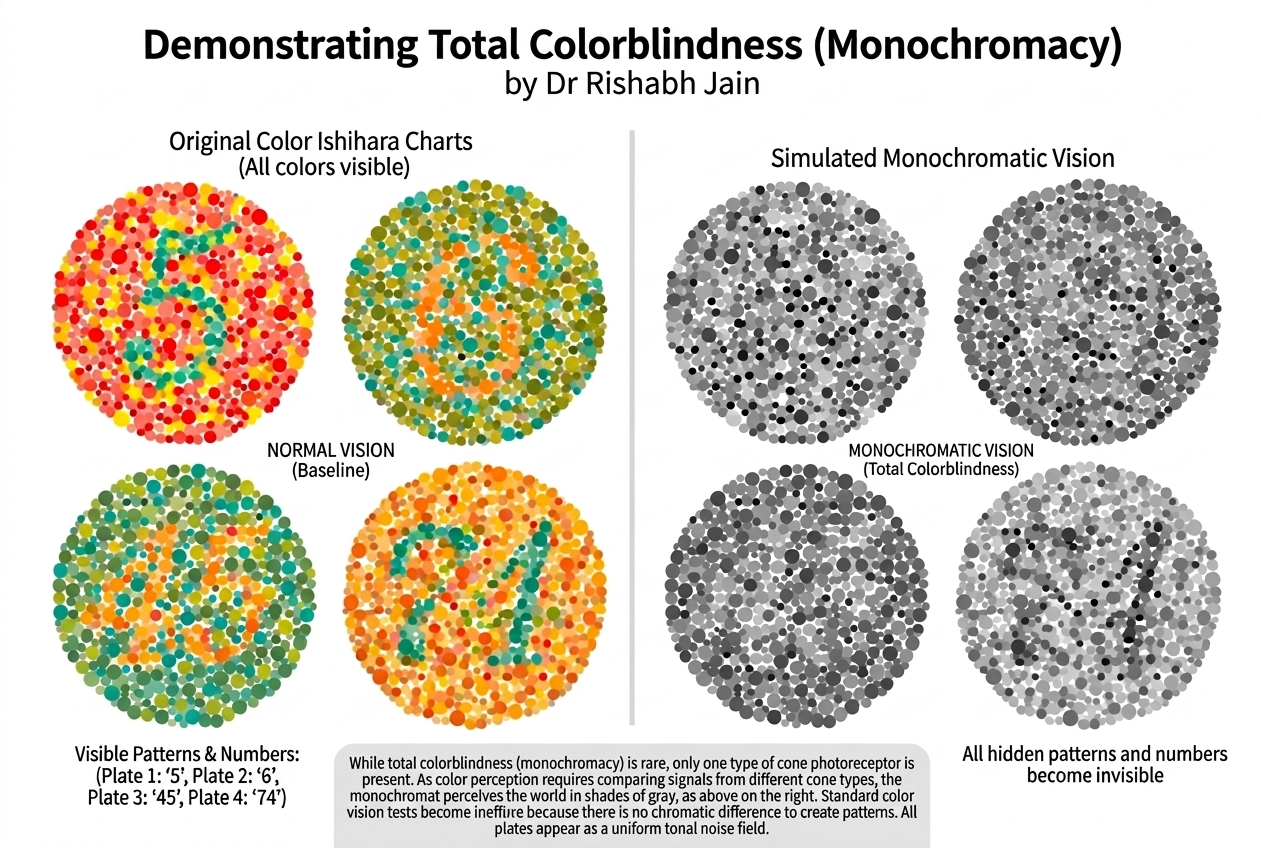
Total Colour Blindness/Achromatopsia
Achromatopsia is a rare eye condition where a person cannot see colors and may have blurry vision and trouble in bright light.
Symptoms:
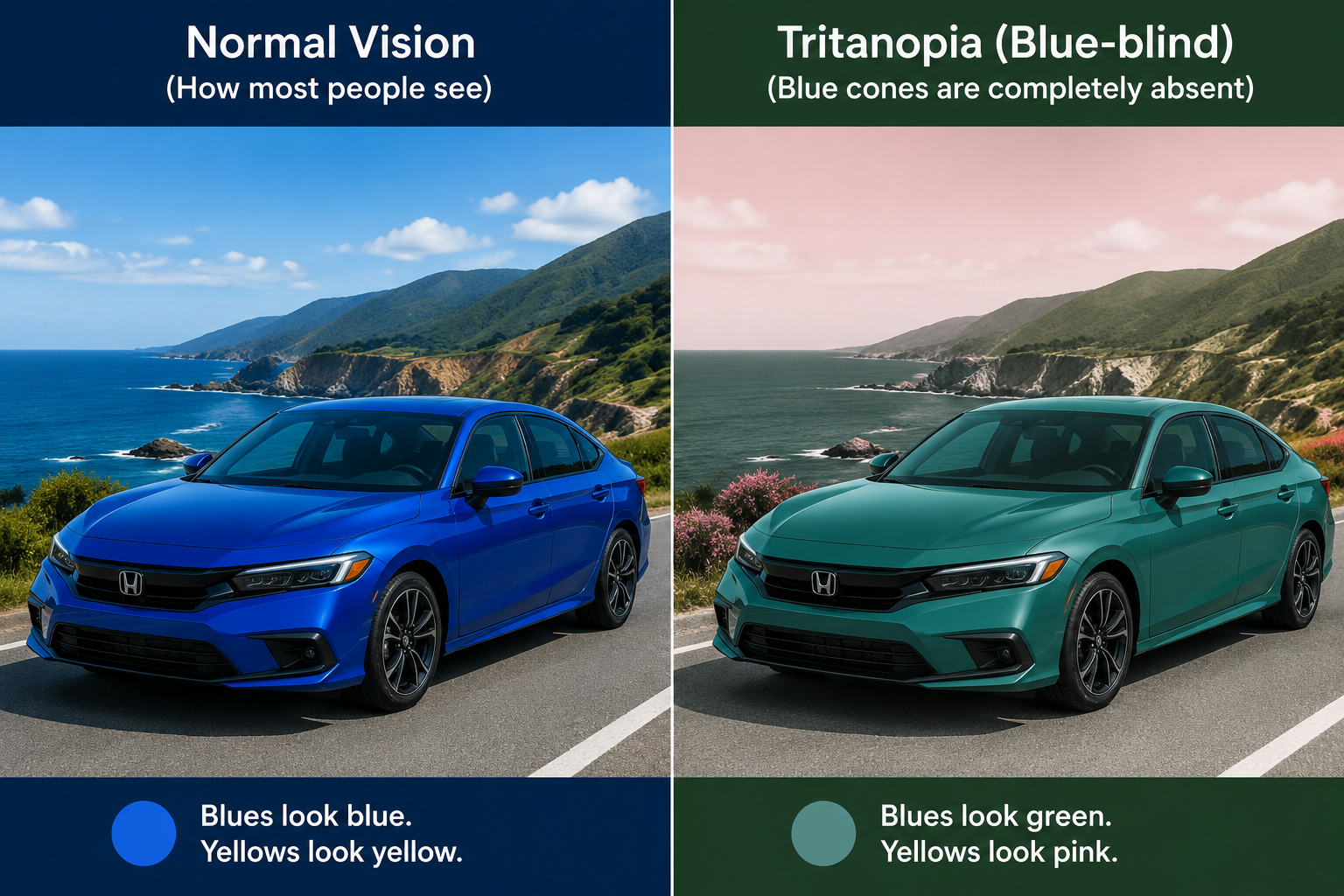
- Color blindness is a condition in which a person has difficulty distinguishing certain colors. Depending on the type, individuals may confuse red and green or blue and yellow. Colors may appear faded, dull, or confusing. Challenges often occur when interpreting traffic lights, reading color-coded materials, or identifying objects by color. Some people may have difficulty noticing subtle color differences in daily activities, such as selecting ripe fruits. Early recognition is important for adapting to visual challenges and maintaining safety in everyday life.